
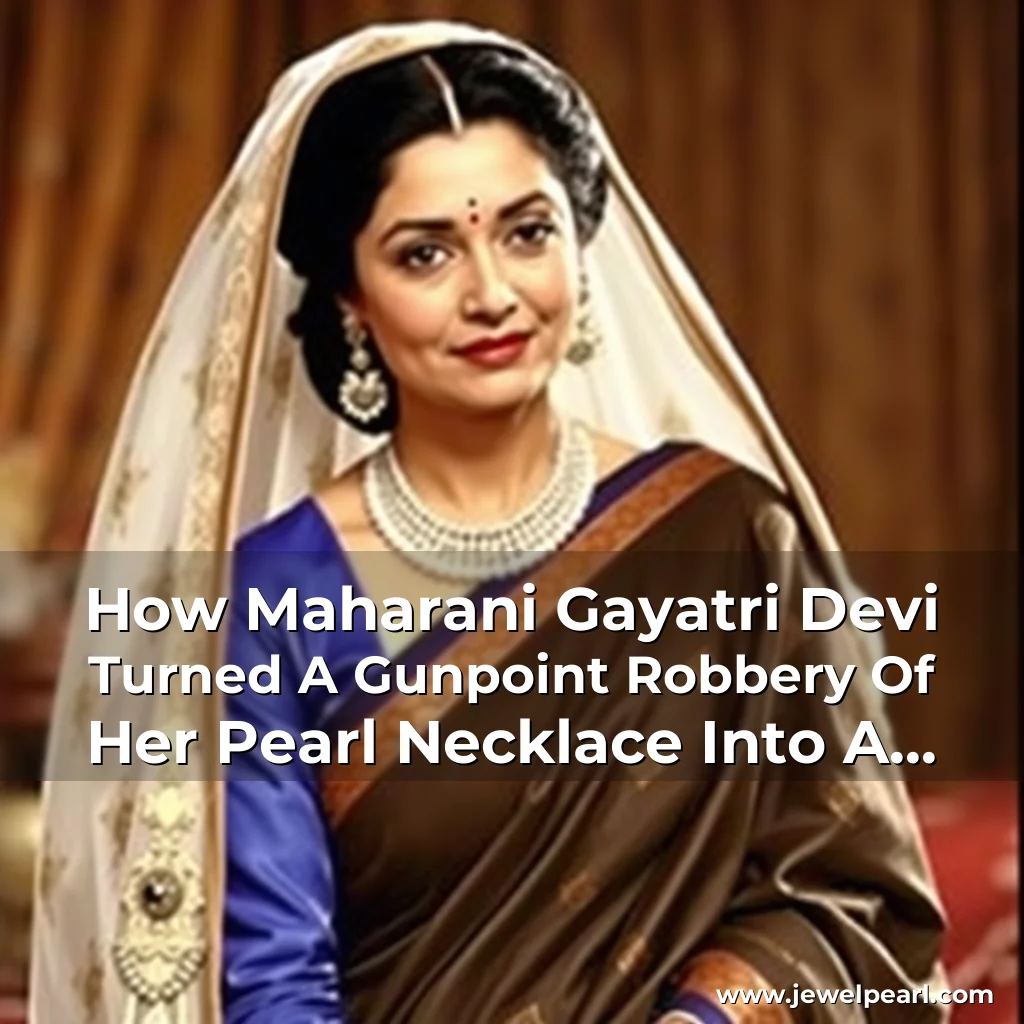
In 1934, she married John Jacob Astor IV, and they had a son, John Jacob Astor VI. He later married into the British royal family when he married Princess Alice of Connaught. The Maharani’s sense of humor was well-known, and she once said, I am not afraid of death, I am afraid of dying. Her sharp wit and sassy attitude have been immortalized in the 2018 film Mary Queen of Scots which starred Saoirse Ronan and Margot Robbie. She had a reputation for being elegant and poised. Her taste in fashion was impeccable, and she was known to favor high-quality, luxurious fabrics like silk and chiffon. Her love for pearls was unmatched, and she was often seen wearing exquisite pearl necklaces. The Maharani’s sense of style was so renowned that it even influenced the fashion industry.
The pearl’s allure was further amplified by its rarity and the exceptional craftsmanship involved in its creation. Indian royalty would often wear these pearls in intricate designs, often paired with precious stones like diamonds, rubies, and emeralds. The Basra pearl’s unique characteristics and association with Indian royalty have left a lasting legacy in the world of luxury and jewelry. Its influence can be seen in various forms of art, architecture, and design, from the intricate patterns and motifs used in Indian textiles to the ornate decorations found in Indian palaces. The Basra pearl’s allure has also inspired numerous artistic and literary works, such as the Persian poem The Conference of the Birds, which features the pearl as a symbol of beauty and refinement. The Basra pearl’s timeless appeal and enduring legacy are a testament to its remarkable beauty and the enduring power of luxury and craftsmanship in human culture. The Basra pearl’s historical significance extends beyond its association with Indian royalty and its appearance in various works of art and literature. It also played a crucial role in the trade and commerce of the ancient Indian Ocean trade network, which connected the East and West and facilitated the exchange of goods and ideas. The pearl’s value was not only monetary but also symbolic, representing the power and status of the ruling elite. The Basra pearl’s rarity and exceptional craftsmanship made it a highly sought-after commodity, driving the development of new technologies and techniques in jewelry making. The pearl’s value was also closely tied to its associations with mythological and cultural significance, with stories of its creation and the mythical creatures that guarded it adding to its allure. The Basra pearl’s historical significance is also evident in its continued use in modern-day jewelry and decorative items, with many contemporary designers incorporating traditional techniques and motifs into their work.
They symbolize purity, elegance, and sophistication. This timeless and versatile gemstone has captivated human imagination for centuries. From ancient civilizations to modern-day celebrities, pearls have been a symbol of status, power, and beauty. In the world of fashion, pearls are a staple, often used to add a touch of glamour and sophistication to any outfit. Maharani Gayatri Devi’s love for pearls is legendary, and her iconic necklace has been emulated by many. The Maharani’s double-strand pearl necklace is a masterpiece of craftsmanship, featuring intricate designs, delicate patterns, and a timeless elegance that exudes refinement and poise. The necklace’s durability and luster have endured for decades, becoming an iconic symbol of the Maharani’s status and style. Today, the Maharani’s double-strand pearl necklace is a coveted piece, sought after by fashion enthusiasts and collectors alike. Its timeless appeal and versatility have made it a staple in the world of fashion, transcending generations and cultural boundaries. Maharani Gayatri Devi’s legacy extends far beyond her fashion sense. She was a strong-willed and intelligent woman, who broke the mold of traditional Indian women. She was a patron of the arts, a diplomat, and a leader. Her impact on Indian society and politics was profound, and her legacy continues to inspire future generations. The Maharani’s courage and determination in the face of adversity are a testament to her strength and character. She was a true icon, who embodied the values of elegance, sophistication, and refinement.
Her love for pearls was not just about aesthetics but about the values they represented. Pearls are formed through a natural process of irritation, where an irritant like a grain of sand gets lodged inside an oyster, causing it to secrete layers of nacre to protect itself.